


- Home/
- Buy Furosemide at Low Price Online in the United Kingdom
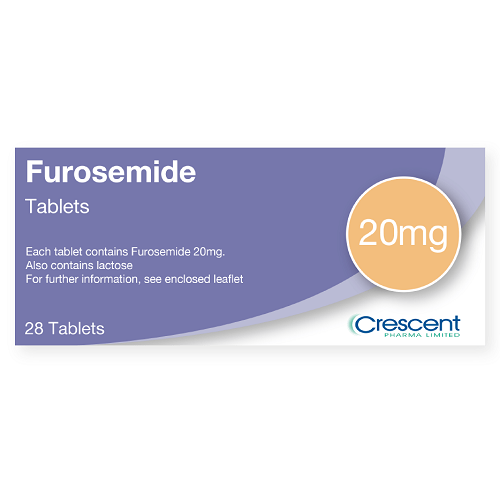
| Name of medicine | Furosemide |
|---|---|
| Main compound | Furosemide |
| Condition addressed | Retention of fluid (oedema) |
| Strengths available | 20 mg, 40 mg, 500 mg tablets; oral and injectable forms |
| Starts working after | 30–60 minutes (oral), 5 minutes (IV injection) |
| Works for | 4–6 hours per dose (oral) |
| How to take | Usually once daily in the morning; occasionally split doses |
| Food and drink considerations | Can be taken with or without food; increased urination expected |
| Prescription status in UK | Prescription-only via the NHS or private clinics |
Furosemide for fluid retention: guidance for patients in United Kingdom
Furosemide is a prescription medicine for treating oedema—fluid accumulation in the body—which can occur in conditions such as heart failure, liver or kidney disease. It is approved and available across the United Kingdom by prescription, and helps to remove excess water from the body when natural mechanisms are overwhelmed.
Oedema: How common is it, and should you be concerned?
Oedema, or fluid retention, is a frequent problem across many medical conditions. According to the NHS and the British Heart Foundation (2023), over 900,000 people in the UK live with heart failure—a major cause of oedema—while kidney and liver conditions affect hundreds of thousands more. Swelling of the legs, ankles, or abdomen often signals excess fluid build-up. You are not alone in facing this: fluid retention is routinely managed in hospital and GP settings, and there are proven treatments available, with Furosemide among the mainstays. Recognising your situation early means it can be addressed safely and effectively.
How Furosemide relieves fluid overload: mechanism and patient experience
Furosemide is a type of “loop diuretic”—a medication that acts on the loop of Henle, a specific part of your kidney’s filtration system. Simply put, it blocks the reabsorption of sodium and chloride in this kidney segment. As a result, more salt—and water that follows it—are flushed out in your urine. The practical outcome: within an hour of taking Furosemide, you’ll likely notice increased urination, and over the next hours to days, swelling in your feet, legs, or abdomen begins to lessen. Most people feel lighter or less “puffy,” and symptoms such as breathlessness from fluid in the lungs can improve. The relief isn’t instant, but is usually noticeable within the first day of treatment. Underlying this mechanism is the heart of Furosemide’s effectiveness: it assists the body in eliminating excess fluid when natural elimination isn’t keeping up.
Is Furosemide right for your situation? Choices laid out
| Situation | Recommendation | Why |
|---|---|---|
| Swelling in legs/ankles with diagnosed heart failure | Furosemide usually appropriate | Well-proven for rapid reduction of fluid linked to heart disease; dosing can be adjusted based on need |
| Oedema due to chronic kidney disease, under specialist care | Furosemide may be used | Often used, sometimes with other diuretics, but requires close monitoring of kidney function |
| Swelling related to liver disease (ascites) | Furosemide sometimes combined with other medicines | Used with caution and often alongside spironolactone to optimise fluid removal |
| Mild swelling from standing or heat, no underlying illness | Furosemide not usually advised | Lifestyle changes preferred; unnecessary diuretic use may disrupt electrolyte balance |
| Pregnant or breastfeeding | Furosemide generally avoided unless specialist recommends | Potential risks to baby; only considered if essential under medical supervision |
| History of allergy to sulfa drugs | Discuss with doctor | Rare but possible cross-reaction; alternatives may be safer |
As seen above, Furosemide is effective for many—but not all—types of oedema. Its suitability depends on your diagnosis, overall health, and concurrent medications. For those unsure, a specialist or GP can clarify which option best matches your clinical circumstances.
How to use Furosemide in real life: practical application and what to expect
- Time of day: Take in the morning to avoid frequent night-time urination. If prescribed twice daily, the second dose should not be late in the day.
- With or without food: Food is optional, but taking with food may reduce stomach upset.
- Hydration: Do not restrict fluids unless specifically told by your doctor. Excessive thirst or dehydration should be discussed promptly.
- Monitoring: Regular blood tests may be needed to check kidney function and electrolytes (such as potassium and sodium).
If you forget a dose, take it as soon as you remember—unless it’s late in the day, in which case wait for your next scheduled dose. Never double up. If you accidentally miss multiple doses, inform your doctor. If the medication seems ineffective (continued swelling or breathlessness), report this, as the dose may need review or another cause may be present.
What’s normal: Increased urination, especially within the first few hours after a dose. Some people experience mild dizziness or occasional muscle cramps, usually minor and self-limiting.
What to watch for: Severe thirst, confusion, muscle weakness, rapid heartbeat, or fainting are not typical—these require prompt medical attention.
Who should avoid Furosemide? Contraindications explained
- Severe allergy to Furosemide or similar diuretics: Because of risk of life-threatening allergic reactions.
- Very low blood pressure: Furosemide can drop blood pressure further, risking collapse.
- Severe dehydration or electrolyte imbalance: If sodium or potassium is dangerously low, Furosemide may worsen the problem.
- Acute kidney failure not responding to diuretics: Adding Furosemide can cause further kidney harm in these cases.
- Liver coma: Use may worsen confusion and coma in advanced liver disease.
- Pregnancy and breastfeeding: Only if clearly necessary, under the guidance of a specialist.
Because Furosemide is potent, the above conditions must be actively ruled out before starting. When in doubt, a medical review is always the safest choice.
What side effects might occur, and when to seek help
- Common and usually mild: Passing urine more often, mild dizziness, dry mouth, muscle cramps, or feeling tired.
- Occasional: Low blood pressure (light-headedness), irregular heartbeat due to potassium loss, ringing in the ears (with high doses).
- Rare but serious: Severe dehydration, confusion, hearing changes, skin rashes, or jaundice (yellowing of skin or eyes).
Most side effects are dose-related and resolve with adjustment. Signs that require urgent attention include: fainting, severe weakness, fast or irregular heartbeat, confusion, or sudden loss of hearing. If these occur, call for emergency help immediately—dial NHS 111 or 999 for ambulance services in the UK.
Can Furosemide be taken with other medicines? Interactions you should know
Furosemide can interact with a range of medicines, sometimes in ways that may be serious. The key interactions include:
- Other blood pressure or heart medications: Risk of very low blood pressure or kidney dysfunction.
- Non-steroidal anti-inflammatory drugs (NSAIDs): These may blunt the effect of Furosemide and worsen kidney function.
- Diabetes drugs: Blood sugar levels can be affected—monitoring may need to be more frequent.
- Certain antibiotics (aminoglycosides): Risk of hearing damage increases when used together with Furosemide.
Always tell your doctor or pharmacist about all medicines, supplements, and herbal remedies you are taking. Adjustments may be needed to ensure safety.
How does Furosemide compare with other options for oedema?
| Medication | Best suited for | Key advantages | Key limitations |
|---|---|---|---|
| Furosemide | Rapid reduction of fluid retention in heart failure, kidney disease, severe oedema | Fast onset, flexible dosing, widely available, suitable for acute and chronic use | Requires monitoring, can disturb electrolyte balance, not optimal for mild or short-term swelling |
| Bumetanide | Patients who do not respond well to Furosemide or require a more potent loop diuretic | May be more effective in some kidney patients, lower tablet size | Shorter duration, similar side effect profile, not always superior |
| Spironolactone | Liver disease-related fluid retention (ascites), mild heart failure | Potassium-sparing, less likely to cause low potassium | Slower onset, not suitable for emergency fluid removal, hormonal side effects |
| Thiazide diuretics | Mild oedema, high blood pressure | Gentler effect, less risk of rapid dehydration | Not strong enough for severe swelling, less effective in advanced kidney disease |
Furosemide remains the first-line choice for significant oedema due to heart or kidney causes. For liver disease, combination therapy with spironolactone is often preferred. Choice depends on severity, underlying cause, and patient-specific factors. No single diuretic is best for every case.
What will Furosemide treatment actually cost in the UK?
| Expense | Amount (GBP) | Notes |
|---|---|---|
| GP/NHS consultation | Free (NHS) | Standard NHS appointments for UK residents |
| Private doctor or online clinic | £30–£90 | Depends on provider, sometimes includes prescription |
| Prescription charge (NHS England) | £9.65 per item | Free in Scotland, Wales, Northern Ireland |
| Furosemide (pack of 28 tablets, 40mg) | £2–£5 (private); included with NHS prescription | Generic options widely available |
| Delivery (online pharmacy) | £3–£6 | Standard UK delivery |
| Total | £9.65–£101.65 | Lowest: NHS route; Highest: private doctor + private prescription + delivery |
Most patients in the UK will only pay the NHS prescription fee (or nothing if eligible for exemptions). Private routes are available for speed or convenience but are more expensive. Delivery costs apply for online orders; collection from local pharmacies is typically free.
Final clarifications: common concerns before you proceed
Doctor’s note: “Sometimes patients worry that they’ll become ‘dependent’ on Furosemide. This is not about addiction, but rather, your underlying condition may require ongoing support to control fluid balance. If your doctor recommends reducing or stopping, it should always be done gradually and with monitoring, since abrupt withdrawal can cause fluid to build up again.”
- Can you get Furosemide without a prescription? In the UK, it is illegal to supply Furosemide without a valid prescription. Online sources offering otherwise should be treated with caution due to risk of counterfeit medicines and lack of medical oversight.
- Is it safe to buy generics? Generic Furosemide in the UK is regulated by the Medicines and Healthcare products Regulatory Agency (MHRA), and must meet the same standards as branded products. Always use a registered UK pharmacy.
- Do you need regular blood checks? Yes, especially during the first weeks of treatment and if the dose changes, as Furosemide can affect your kidney function and blood salts. Your healthcare provider will advise on the frequency.